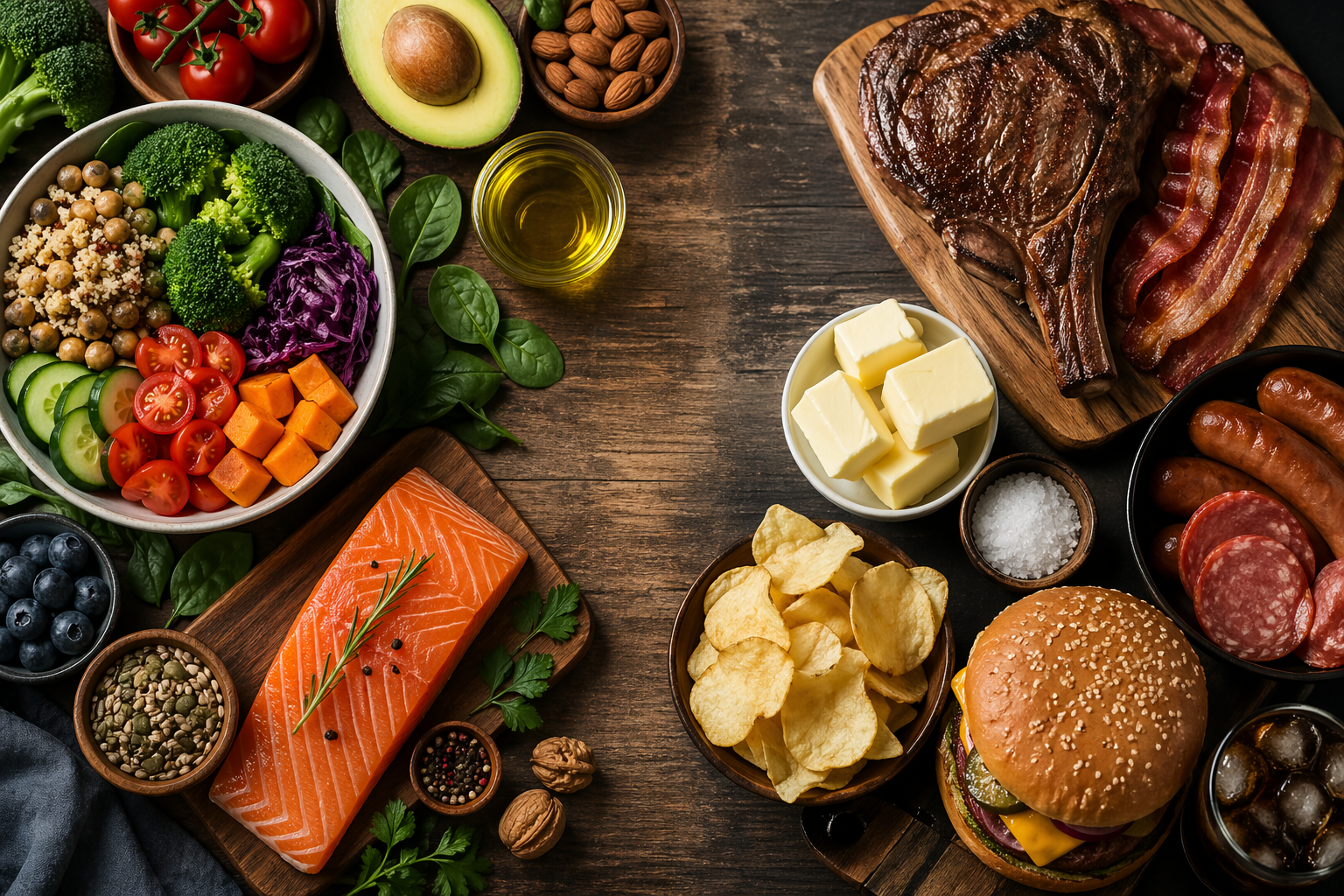
Millions try it. Many see real short-term results. Social media fills with dramatic testimonials, before-and-after photos, and passionate advocates claiming they finally found the answer.
Then the cycle repeats.
Another trend rises. Another tribe forms. Another wave of people chase fast visible wins while ignoring the harder question:
What happens over the long term?
This is where modern diet culture often breaks down. A plan can create quick progress and still be the wrong long-range fit. Short-term success is real. But short-term success and long-term health are not the same thing.
In This Article
Why Trending Diets Keep Going Viral
People are not foolish for trying these diets. Many are tired, overweight, inflamed, discouraged, confused, or frustrated after years of contradictory advice. They want something that works.
When someone loses 40 pounds, reports better energy, or says their brain fog vanished, people naturally pay attention. That reaction is understandable.
The problem is that the internet rewards dramatic stories, certainty, tribal identity, before-and-after photos, strong opinions, and quick transformations. It does not reward patience, nuance, or five-year follow-up data. Many plans go viral not because they are superior, but because they are emotionally compelling.
Popular Diet Trends Often Follow the Same Pattern
The names change, but the mechanics are often similar: keto, carnivore, intermittent fasting extremes, OMAD, paleo extremes, juice cleanses, detox plans, raw vegan extremes, very low-calorie crash diets, macro obsession plans. Different uniforms. Similar psychology.
Many trending systems offer strict rules, clear identity, and visible early changes. For someone who has struggled for years, that can feel life-changing. But feeling powerful in month one does not automatically mean the plan is wise in year five.
Why These Diets Often Work at First
To be fair, many popular diets really do help people in the beginning. That usually happens because of practical reasons rather than magic: lower overall calorie intake from eliminating many foods, less processed food (cutting soda, desserts, fast food), less mindless snacking, higher protein increasing satiety, more structure reducing decision fatigue, early water loss especially on lower-carb plans, and a motivation surge that improves several habits simultaneously.
Research comparing different diets repeatedly shows that adherence is one of the biggest predictors of success, often more than the specific brand name of the diet itself. Source
Sometimes people think the diet itself was the miracle when the real win was finally removing chaos and becoming consistent.
Visible Wins Can Hide Invisible Costs
Weight loss and feeling better can happen while other issues develop quietly in the background. Depending on the person and the plan, that may include rising LDL cholesterol, digestive problems (constipation, bloating, irregularity when fiber drops), nutrient gaps (folate, magnesium, potassium, vitamin C, phytonutrients), food obsession and anxiety around “cheating,” social strain from extreme eating patterns, and rebound overeating after prolonged restriction.
Reviews of ketogenic diets note that while blood sugar and body weight may improve initially, LDL cholesterol can rise substantially in certain individuals, particularly when saturated fat intake is high. Source
The body can compensate for a season. That does not always mean the path is ideal long-term.
The Long Game Is What Most People Ignore
Ask better questions: How does this look after two years? Can it survive stress, holidays, travel, and real life? Does it create anxiety around food? Will it still work as metabolism and age change? Can I enjoy life while doing this? Do my labs still look good later?
If a plan only works under perfect conditions, it may not be a lifestyle. It may be a phase. That matters because long-term health is usually built through repetition, not heroic bursts of discipline.
The Business of Diet Certainty
Many voices online are sincere. Some truly want to help. But incentives still matter. There is money in coaching programs, books, meal plans, supplement stacks, affiliate links, private communities, identity branding, and ad revenue. The louder and more certain the message, the easier it often sells.
“It depends” rarely goes viral.
Be cautious when someone profits from convincing you that only one narrow path leads to health.
The Regurgitation Problem
Many slogans spread faster than truth: Carbs are toxic. Fruit is bad. Fiber is useless. Humans only ate meat. One ingredient ruined society. Simple messages feel satisfying because they remove complexity. But biology is rarely that simple.
For example, higher dietary fiber intake is consistently associated with lower all-cause mortality, lower cardiovascular disease risk, improved metabolic health, and better digestive outcomes. Source
When someone dismisses an entire food category with a slogan, caution is wise.
What Long-Term Evidence Keeps Pointing Toward
The habits that repeatedly show up in stronger long-range research are usually less glamorous: mostly whole foods, adequate protein, vegetables and fruit, legumes and nuts, healthy fats like olive oil, regular movement, good sleep, stress management, consistency, and flexibility. Moderate habits repeated beat extreme habits abandoned.
Mediterranean-style eating patterns remain among the most studied and are associated with lower cardiovascular risk, better metabolic markers, and stronger long-term adherence. Source
The PREDIMED trial found that Mediterranean-style eating patterns supplemented with olive oil or nuts significantly reduced major cardiovascular events in high-risk adults. Source
A Better Way to Think
I’ve benefited from plant-focused protocols and structured routines, but experience taught me that no diet deserves blind loyalty. What matters is results, context, and whether a lifestyle can actually be sustained. Use tools wisely. Keep what helps. Discard what harms. Stay humble enough to adjust.
The Real Goal
Health is usually built by habits you can repeat, not rules you can barely survive. The next miracle diet will come. Another influencer will promise hidden secrets. Another round of testimonials will flood the internet. Think clearly when it does.
You do not need dietary extremism to improve your life. You need consistency, discernment, and a plan you can realistically live with for years.
Quick Statistics Worth Remembering
- Long-term weight-loss maintenance remains difficult for most people regardless of diet label. Source
- Cardiovascular disease remains the leading global cause of death. WHO Source
- Higher adherence to Mediterranean-style eating patterns is repeatedly linked with lower disease risk and mortality. Source
- Higher fiber intake is associated with lower all-cause mortality and lower cardiovascular disease risk. Source
Want the tools to think through diet trends yourself?
You Do You is my book on critical thinking — how to evaluate evidence, spot incentives, and make informed decisions in a world full of noise. Get a free overview.
Disclaimer
This content is for informational purposes only and is not a substitute for professional medical advice, diagnosis, or treatment. Always consult a qualified healthcare professional before making any changes to your health regimen, including medications, diet, exercise, or supplementation. David Julian, Natural Vitality Advocate, is not a licensed medical professional. Views expressed are personal and based on lived experience — they do not guarantee specific outcomes. David Julian is not affiliated with Natural Vitality or NaturalVitality.com.