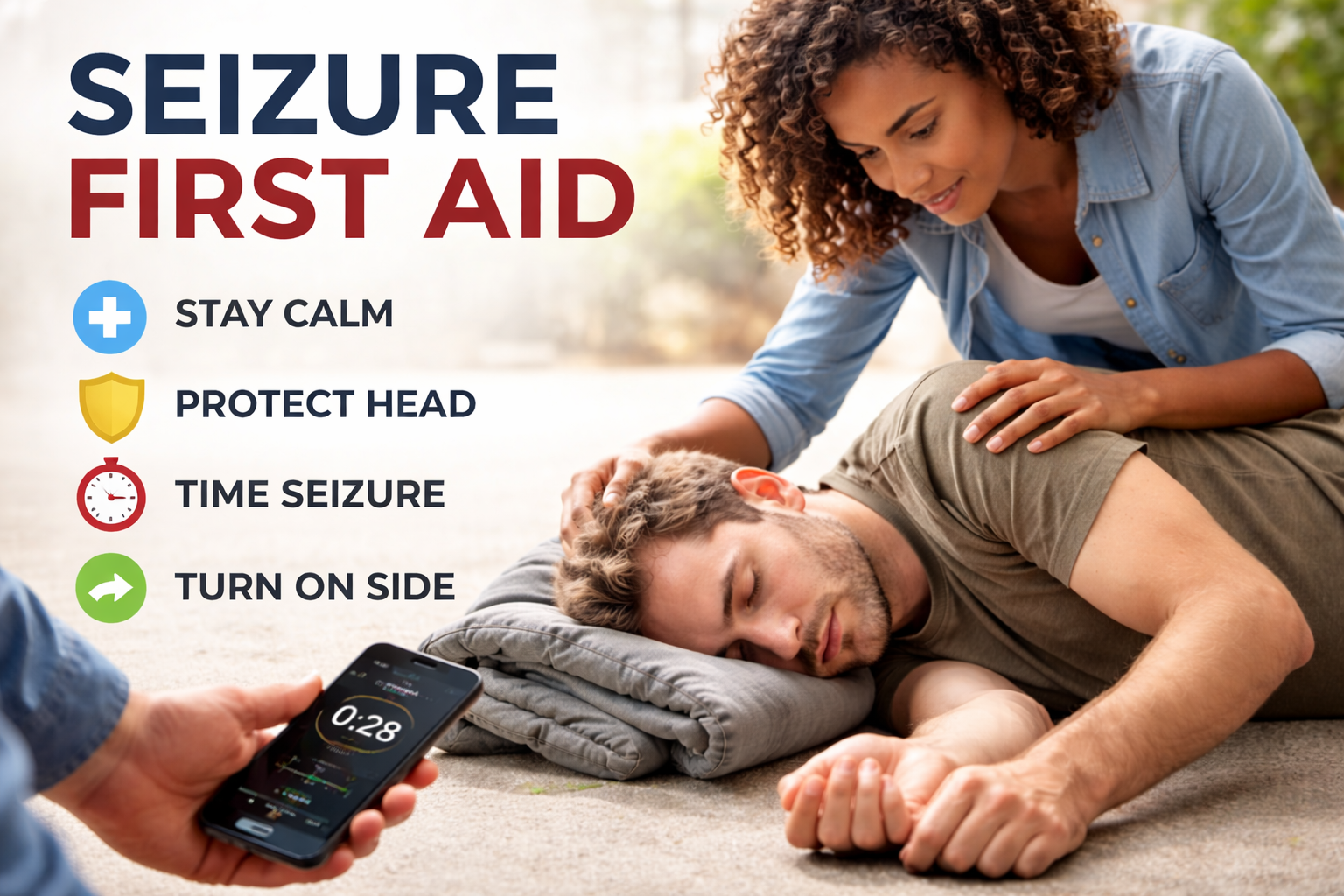
Calm, simple, safety-focused steps for helping someone during and after a seizure.
Seizure first aid should be calm, simple, and focused on safety. Most seizures end on their own within a few minutes. The goal is not to control the seizure. The goal is to protect the person from injury, watch what happens, and know when emergency help is needed.
Call 911 right away if: the seizure lasts longer than 5 minutes, repeated seizures happen without recovery in between, it is the person’s first known seizure, the seizure happens in water, the person is injured, has trouble breathing, is pregnant, or does not wake up or recover normally afterward.
What To Do During a Seizure
What Not To Do
- Do not hold the person down or try to stop their movements.
- Do not put anything in their mouth.
- Do not give food, water, or pills until they are fully alert.
- Do not give mouth-to-mouth during the seizure.
After the Seizure
Recovery can include confusion, fatigue, headache, embarrassment, or emotional distress. Speak calmly. Offer privacy and reassurance. Stay until the person is alert enough to understand what happened and can move safely.
For Family and Caregivers: Learning seizure first aid helps replace panic with clarity. Calm, informed support can protect the person and make a frightening moment much less dangerous.
Related Epilepsy Resources
SUDEP Awareness
Important information about safety, risk awareness, and prevention conversations.
Learn More →Final Thought
Seizure first aid does not need to be complicated. Stay calm. Protect the person. Watch the time. Know when to get help. Those basics matter.
Disclaimer
This content is for informational purposes only and is not a substitute for professional medical advice, diagnosis, or emergency care. If a seizure is prolonged, repeated, involves injury or breathing problems, or appears to be a first seizure, seek emergency medical help. David Julian, Natural Vitality Advocate, is not a licensed medical professional.