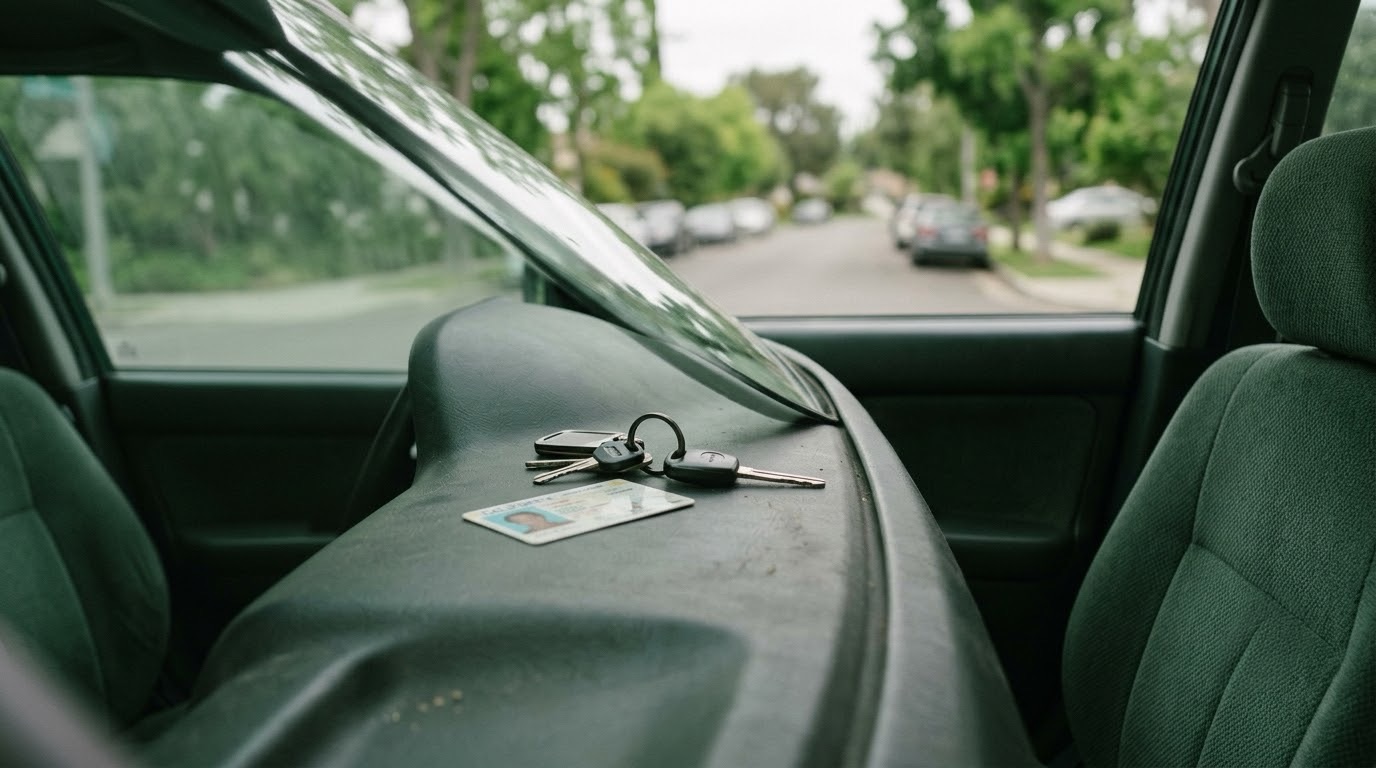
There’s a particular age where independence starts arriving in pieces. A license. A first job. The first real taste of moving through the world without someone else’s permission attached to it. For most teenagers, those pieces arrive and mostly stay. You get the license, and barring something unusual, you keep it.
Chronic illness doesn’t let you keep things that simply. I learned that lesson repeatedly during my own teenage years with epilepsy — not once, but on a loop. Something would be earned. Then a seizure would take it back. Then, with time and stability, it would be given back. And then, eventually, taken again. (If you haven’t read What a Diagnosis Actually Does, that’s where this story really starts — at fifteen, with the word itself.)
What Gets Taken From Adolescence
Adolescence is supposed to be the years where you build the muscle of independence — earning trust, earning freedom, earning the small proofs that you can be responsible for yourself. A chronic condition doesn’t stop that process. It just makes it non-linear in a way nothing prepares you for. You build the same muscle over and over, because circumstances outside your control keep interrupting the progress you’d already made.
That’s a different kind of loss than losing something once. It’s the loss of a stable foundation to build on at all — the particular exhaustion of having to re-earn things you’d already proven you could handle, through no failure of your own. Add to that the social calculation every chronic illness eventually demands: who to tell, how much to say, and the quiet fear that one more thing setting you apart might cost you a place you were still trying to find. Most of my peers weren’t managing that calculation. I was managing it constantly, in the background of nearly every relationship I was trying to build.
For Parents and Teens Navigating This Now
If you’re a parent watching your teenager lose something to a chronic condition — a license, a team, a plan they’d been building toward — the hardest part to sit with is usually that there’s no fixing the unfairness of it. What actually helps isn’t minimizing the loss or rushing past it toward the next plan. It’s staying present through the re-earning, every time, without making your teenager feel like a burden for needing to start over again.
If you’re the teenager living this: the friends who handle it well — who ask real questions instead of pulling away, who don’t make your condition the whole story of who you are — are rarer than you’d like, and worth everything when you find them. The ones who pull back are telling you something true about them, not about you. That distinction took me longer to understand than I wish it had.
That distinction — learning who could handle the truth and who couldn’t — became its own lifelong skill. I write more about what that cost me, and what it gave back, in What Living With an Invisible Condition Teaches You About Trust.
Read the Full Story
This post touches one theme. The full account of those years is in “Still Walking.”