There is no shortage of opinions when it comes to diet. One side insists the human body is built to run primarily on animal foods, while another argues just as strongly that plant-based eating is the only path to health. Some blame carbohydrates, others point to fat, and many build entire systems around rigid frameworks that promise clarity but often create confusion.
The issue is not a lack of information. The issue is that most of it is built on extremes.
When you step back and look at how the body actually functions, a different picture emerges. The body does not require a perfect ideology. It requires consistent support. It runs on systems—hydration, mineral balance, digestion, energy regulation, and recovery. After years of managing chronic illness and researching nutrition in the context of real-world health challenges, this is the framework that has held up best for me.
In This Article
What Actually Matters
Nutrient density, bioavailability, digestibility, mineral balance, and consistency. Calories are easy to get. Nutrients are not. And even when nutrients are present, they only matter if the body can absorb and use them effectively.
Human Diet: Adaptable by Design
Humans are not locked into one rigid way of eating. Traditional diets varied widely depending on environment and availability. The takeaway is simple: the body is adaptable—but it still requires consistent support. View research on ancestral diet variation
Animal Foods: Use Them Wisely
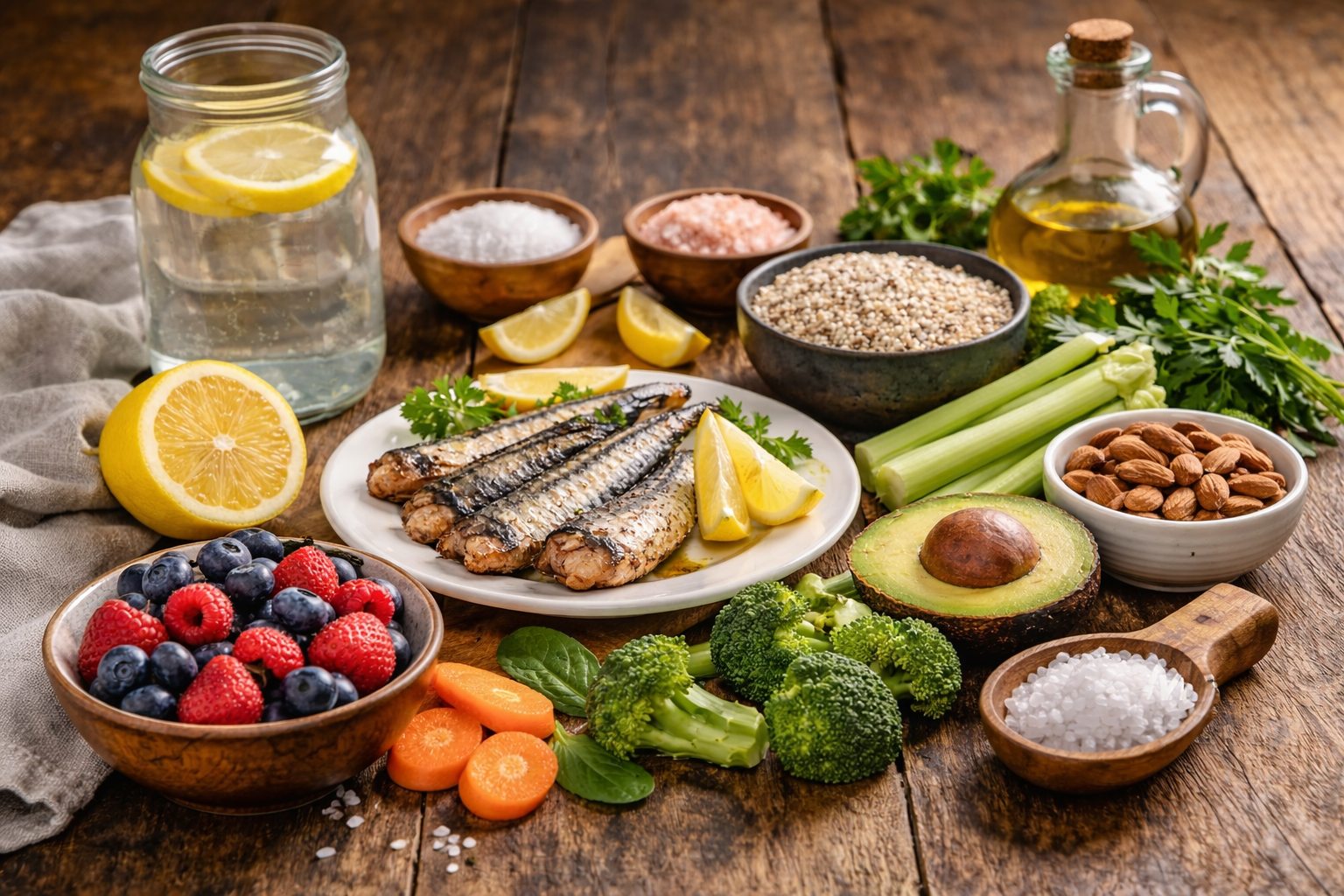
Animal foods provide nutrients that are difficult to replace, including B12, heme iron, and omega-3 fats. Rather than over-relying on heavy meats, I prioritize cleaner fish sources such as sardines, wild salmon, and trout. FDA guidance on choosing lower-mercury fish
Plant Foods: Functional Support
Plant foods provide potassium, hydration, fiber, and metabolic support. Fruit is a consistent part of my protocol—not out of ideology, but because it provides usable energy and hydration. Research on fruit intake and metabolic health
Daily Structure
- Lemon water (optionally with quality salt)
- Celery juice
- Fruit spaced throughout the day
- Simple vegetables
- Small amounts of nuts
Weekly Rotation
- Cruciferous vegetables
- Color variety
- Fermented foods like sauerkraut
Gut Health
The gut influences digestion, immunity, and overall function. Fiber and fermented foods support this system without needing complicated protocols. NIH overview of the microbiome | The Lancet study on fiber and health outcomes
Mineral Balance
Hydration is not just water. Sodium, potassium, and magnesium regulate how fluids move and function in the body. Research on sodium–potassium balance
For a deeper breakdown: Read my sodium–potassium guide
Daily Rhythm
The body operates on a circadian rhythm. Supporting it with a structured day—hydration in the morning, a main midday meal, and lighter evening intake—helps maintain energy and recovery. Research on meal timing and metabolism
Structure Without Obsession
Most people either have no structure or try to control everything. Neither works long term. The goal is a framework that supports your life—not one that controls it. Fruit and nuts spaced naturally. Meals structured but not rigid.
The System
- Nutrient-dense foods
- Daily plant intake
- Clean fish as primary animal food
- Fruit and nuts spaced throughout the day
- Mineral balance
- Consistent routine
Final Thought
Health does not come from finding the perfect diet. It comes from supporting the body consistently. You don’t need everything figured out. You need a starting point—and the discipline to follow through.
Take the First Step
Start simple. Begin your day with lemon water in room temperature or warm water. If desired, add a small pinch of high-quality salt such as Celtic sea salt or Maldon sea salt.
Healing begins with simple steps taken consistently.
Want the complete Lifestyle Foundations Essentials guide?
The six core pillars that quietly determine whether everything else you’re doing actually works.
Disclaimer
This content is for informational purposes only and is not a substitute for professional medical advice, diagnosis, or treatment. Always consult a qualified healthcare professional before making any changes to your health regimen, including medications, diet, exercise, or supplementation. David Julian, Natural Vitality Advocate, is not a licensed medical professional. Views expressed are personal and based on lived experience — they do not guarantee specific outcomes. David Julian is not affiliated with Natural Vitality or NaturalVitality.com.