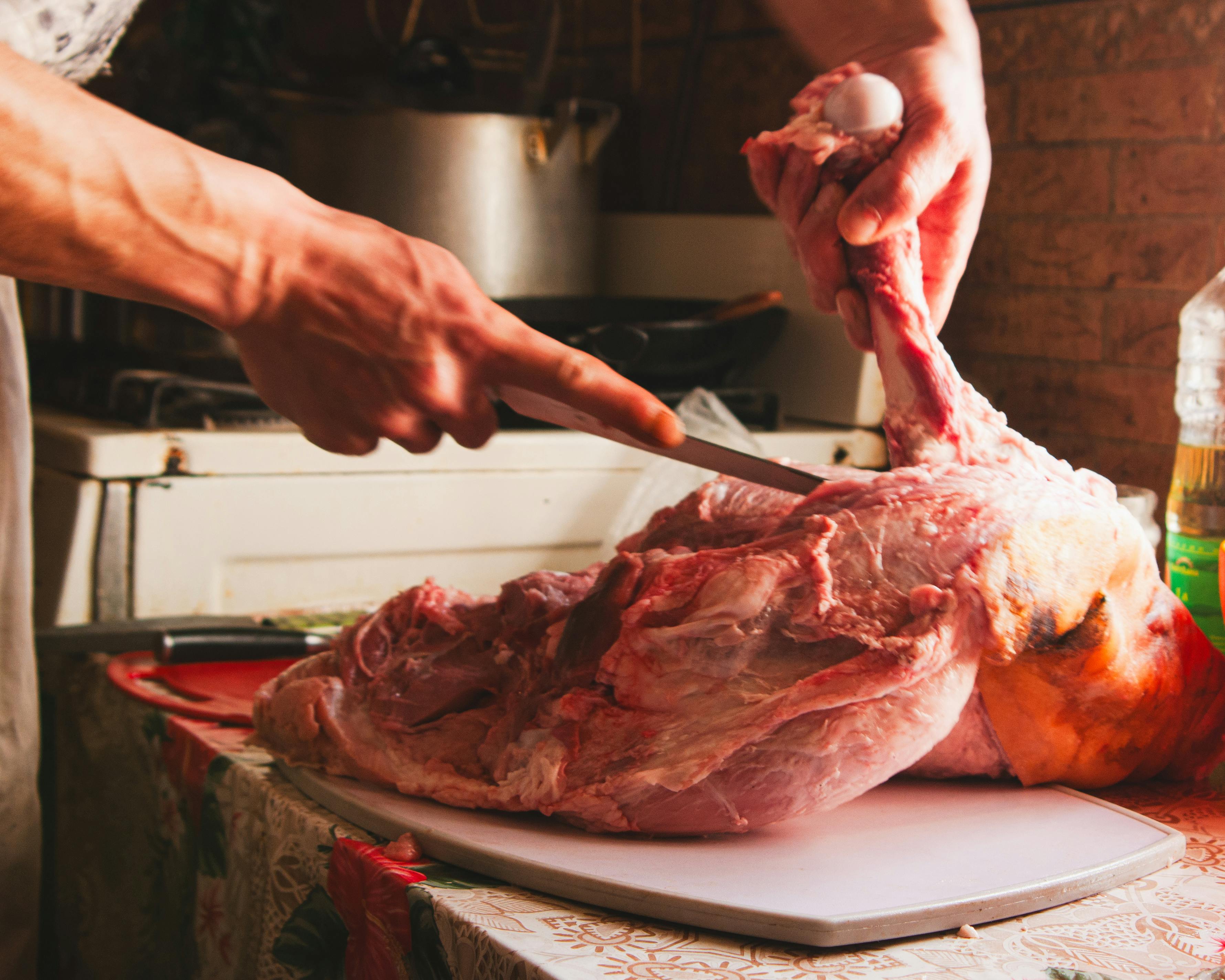
I’ve been asked this question more times than I can count: “Do I have to give up meat entirely to heal?”
It’s one of the first questions people ask when they start exploring a whole-food, plant-forward healing path — and I understand why. Meat is deeply woven into most people’s diets, their family traditions, their sense of what a meal even looks like. Telling someone to walk away from it entirely feels like a big ask, especially early on.
My honest answer after years of managing epilepsy, traumatic brain injury, post-concussion syndrome, and chronic illness through nutrition: the question isn’t really yes or no on meat. The question is which proteins support your healing, and which ones quietly work against it.
I still eat sardines. Occasionally. They’ve been part of my protocol for years — particularly on days following strength training with weights and resistance bands, when my body is doing active muscular repair. But I’ve largely moved away from other animal proteins, not because of ideology, but because of how my body responds. Less nerve pain. Fewer post-seizure recovery days. More mental clarity. The results have been real enough that I keep coming back to this framework.
This post is what I’ve learned — about which meats are the cleanest choices, why certain ones burden healing rather than support it, how to source and prepare what you do eat, and how I think about all of this through the lens of Biblical stewardship. Take what’s useful. Leave what isn’t. Every healing path is personal.
In This Article
Why Meat Choice Matters on a Healing Path
The core issue isn’t protein itself — it’s what comes with the protein and what it does inside a body that’s already under stress.
When the liver is burdened — and most people dealing with chronic illness, neurological conditions, or long-term medication use have a burdened liver — its ability to process dense animal fats and proteins is already compromised. Adding more of what’s hard to process slows everything down: detox, immune response, inflammation clearance, nerve repair.
There’s also the question of what travels with the meat. Hormones, antibiotics, heavy metals concentrated up the food chain, and what practitioners in the root-cause health space describe as adrenaline residue from the stress of slaughter — all of these land in your body alongside the protein. For someone managing epilepsy and neurological sensitivity, none of that is neutral.
That doesn’t mean all meat is the same. There’s a real hierarchy, and understanding it lets you make informed choices rather than all-or-nothing decisions.
The Animal Protein Hierarchy: Most to Least Healing-Compatible
| Animal Protein | Healing Compatibility | Key Notes |
|---|---|---|
| Sardines | Best choice | Wild-caught in water only. Low mercury, omega-3 rich, light on the liver, well tolerated. |
| Wild Salmon | Occasional use | Wild-caught only — sockeye preferred. Never farmed, never smoked. Higher mercury than sardines; use sparingly. |
| Pasture-Raised Chicken | Transition use | Pasture-raised, organic only. Best as a bridge while moving toward more plant-forward eating. Always pair with raw greens. |
| Grass-Fed Lamb | Very rarely | Heavy on the liver. Not ideal during active healing phases. Reserve for occasional use if strongly preferred. |
| Beef (any variety) | Not recommended | Even grass-fed, organic beef is dense with protein and fat that burdens the liver. High adrenaline load per personal experience. |
| Pork | Avoid | Among the most problematic for healing. Avoided entirely on my protocol. |
| Shellfish | Avoid | High toxin concentration, heavy metal accumulation. Not part of a healing protocol. |
Sardines: Why This Is the One I Keep Coming Back To
I buy sardines from Costco or Amazon — wild-caught, packed in water, no additives. It’s not glamorous, but it’s consistent, affordable, and fits my protocol without compromise.
- Low on the food chain. Sardines eat plankton and small organisms, so they don’t accumulate mercury and heavy metals the way larger predatory fish do. FDA testing puts the average mercury level in commercial sardines at just 0.013 ppm — well under the FDA’s action level of 1.0 ppm, and squarely in the agency’s “Best Choices” category for regular consumption.
- Rich in omega-3 fatty acids. EPA and DHA support brain cell membrane integrity, reduce neurological inflammation, and support cardiovascular health.
- High in selenium, a mineral with a well-documented role in thyroid hormone metabolism and immune defense.
- Relatively light on the liver. Processed with far less effort than red meat or chicken.
- Complete protein without the burden. All essential amino acids in a clean, bioavailable form.
How I Eat Them
I typically eat sardines at my main meal — usually lunch — paired with a large salad or mixed vegetables, lentils, fresh sprouts, and lemon juice. Wild-caught sardines in water. That’s it on the label.
Wild Salmon: A Legitimate Second Option
Wild salmon — especially sockeye — is a reasonable occasional choice. Wild-caught only. Never farmed, never smoked. Sockeye over Atlantic. Once or twice a month, not a daily staple.
- Farmed salmon consistently tests higher in PCBs than wild-caught salmon — EWG testing found farmed salmon carrying roughly 16 times the dioxin-like PCBs of wild salmon, and it also lacks the omega-3 profile of wild fish. (Some newer research complicates the picture on dioxins specifically, where findings vary by region and study — the PCB gap is the more consistent finding across the literature.)
- Smoked fish contains compounds that are hard on the liver.
- Sockeye is almost always wild-caught; its deep red color indicates high astaxanthin content — a powerful antioxidant.
Sourcing Tips
Wild-Caught Alaskan Sockeye at Trader Joe’s, Costco, or your local natural grocery. Canned wild sockeye is also excellent — Vital Choice and Wild Planet are two brands with clean sourcing.
Pasture-Raised Chicken: A Bridge, Not a Foundation
If you’re early in your transition and chicken is a regular part of your meals, gradual movement matters more than perfection. What to look for: pasture-raised and organic — not just “free range,” which is a largely meaningless marketing term. No antibiotics, no hormones. Air-chilled rather than water-chilled.
The critical step is pairing: whenever I eat chicken, the majority of the meal is raw leafy greens — spinach, romaine, arugula — along with cucumber, fresh herbs, sprouts, and lemon. Steamed, baked, or poached is far preferable to fried or grilled over high heat. Think of pasture-raised chicken as a transitional protein — something you reach for less and less as your healing deepens.
The Hidden Problem: Adrenaline in Meat
This is one of the most overlooked aspects of animal protein consumption on a healing path, and one I want to address honestly.
Animals experience significant stress during the slaughter process. That stress triggers adrenaline release. The question of whether that adrenaline remains biologically active in the tissue after slaughter and affects the consumer is a concept found in various holistic health traditions — including the work of practitioners like Anthony William — but it is not currently confirmed by peer-reviewed clinical research. I want to be clear about that distinction.
What I can tell you is what I’ve personally observed: when I’ve eaten conventionally-raised beef — even once, even in small amounts — there’s a subtle but real uptick in nervous system irritability in the hours that follow. Heightened anxiety. Increased sensitivity to light and sound. A sense of agitation that I associate with my nervous system being pushed. I share this as personal experience, not as established science, and I recognize that others may not observe the same thing. Your own experience is the best data you have.
Sardines, by contrast, are harvested in ways that involve far less individual animal stress and are small enough that whatever the mechanism, it has not produced the same effect for me.
Why I No Longer Eat Beef — Even Grass-Fed
The fundamental issues with beef remain regardless of how the animal was raised: dense protein and saturated fat that burdens the liver, no nutrient that can’t be obtained from cleaner sources, and inflammation-promoting compounds that add to an already elevated inflammatory burden. I made this shift gradually over time. The improvements in recovery, mental clarity, and seizure frequency were real enough to sustain the change.
A Biblical Stewardship Perspective
My faith shapes how I think about food — not legalistically, but through the lens of stewardship. “Do you not know that your body is a temple of the Holy Spirit within you?” (1 Corinthians 6:19, NASB). That verse has always struck me as more than a warning against obvious vices. It’s an invitation to treat this body — the one God gave me, the one I’ve asked Him to help heal — with intentionality and care.
The New Testament is clear that dietary laws are not a matter of righteousness (Romans 14:3, 1 Timothy 4:3-5). But wisdom still applies within that freedom. “Everything is permissible, but not everything is beneficial” (1 Corinthians 10:23, NASB).
What I Eat in a Day
- Morning: 16–32 oz celery juice on an empty stomach. Lemon water with a pinch of sea salt. Supplements. Bible reading, prayer, morning faith routine.
- Mid-morning: Heavy Metal Detox Smoothie (a protocol credited to Anthony William, discussed further above) — wild blueberries, banana, cilantro, spirulina, barley grass juice powder, Atlantic dulse, orange juice.
- Lunch (main meal): Mixed vegetables, lentils, fresh sprouts and herbs with lemon juice. Wild sardines in water alongside, 2–3 times per week.
- Afternoon: Nuts, figs and dates or seasonal fruit. Herbal tea.
- Evening: Intentionally light to support overnight detox and deep sleep.
Animal protein appears in this picture 2–3 times per week at most — not at every meal, and not as the centerpiece of nutrition.
If you’re eating animal protein this sparingly, it’s worth tracking nutrients like B12 and iron with your doctor rather than assuming a plant-forward diet covers them automatically — that’s a conversation worth having with whoever manages your care, not a substitute for it.
Practical Sourcing Guide
- Sardines: Costco (wild-caught in water, 12-pack). Trader Joe’s. Wild Planet, King Oscar (in water only).
- Wild Salmon (canned): Wild Planet Wild Sockeye Salmon, Vital Choice, Costco Kirkland wild-caught Alaskan pink salmon.
- Wild Salmon (fresh/frozen): Costco, Trader Joe’s frozen wild-caught portions, Whole Foods wild-caught section.
- Pasture-Raised Chicken: Vital Farms, Mary’s Organic Chicken, Whole Foods 365 pasture-raised line. Look for “Certified Humane” or “Animal Welfare Approved” — not just “free range.”
If You’re Not Ready to Give Up Meat Entirely — That’s Okay
This is not a moral judgment. Dietary choices are personal, healing paths are individual. What I know from my own experience is that gradual, consistent movement toward cleaner proteins and a more plant-forward foundation has produced real, measurable improvements. I’m sharing what has worked for me and why — so you have more information to make your own informed decisions.
You don’t have to be perfect to be healing. You just have to keep moving in the right direction.
Want the complete Detox Foundations Guide?
What detox foundations actually mean, exactly where to focus first, and what to skip entirely, all in one free guide.
Related Posts
- Understanding Protein and Essential Amino Acids for Healing
- Carnivore Diet vs. Whole-Food Healing: My Honest Take
- Healing Through Nutrition and Faith
Disclaimer
This content is for informational purposes only and is not a substitute for professional medical advice, diagnosis, or treatment. Always consult a qualified healthcare professional before making any changes to your health regimen, including medications, diet, exercise, or supplementation. David Julian, Natural Vitality Advocate, is not a licensed medical professional. Views expressed are personal and based on lived experience — they do not guarantee specific outcomes. David Julian is not affiliated with Natural Vitality or NaturalVitality.com.