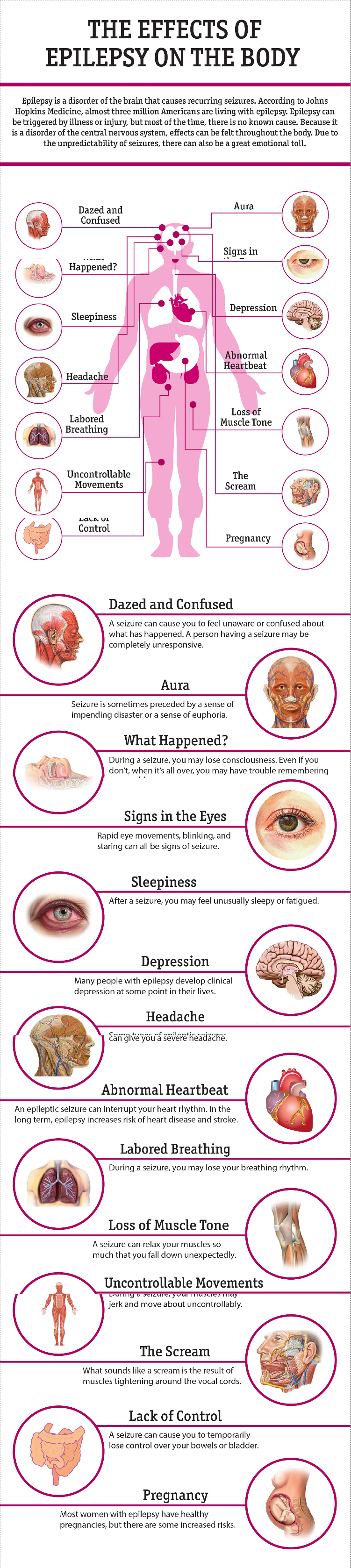
I didn’t fully understand epilepsy’s reach for years. I understood seizures — I’d been having them for most of my adult life — but it took a long time, and a lot of reading, to appreciate how far the ripple effects extend. Epilepsy doesn’t live only in the moment of a seizure. It lives in your bones, your sleep, your cardiovascular system, your hormones, your mental health, and in the slow accumulation of what years on multiple medications does to a body trying to manage a lifelong neurological condition. This is something I’ve had to understand not from a textbook, but from living it.
In This Article
The Nervous System: Beyond the Seizure
The most direct impact of epilepsy is on the nervous system itself. Repeated seizures can cause localized changes in brain tissue, affect memory consolidation, and alter cognitive function over time. The degree of impact varies significantly by seizure type, frequency, and duration — someone with well-controlled focal seizures may experience minimal cognitive effects, while someone with frequent, uncontrolled generalized seizures may deal with progressive changes in memory and processing speed.
For people with drug-resistant epilepsy, the challenge is compounded. The brain is exposed to both the seizure activity itself and to the cumulative pharmacological load of long-term antiseizure medication use. Cognitive fatigue — the kind that makes sustained concentration feel like running uphill — is one of the most underreported and underappreciated effects of living with epilepsy and its treatment. It’s also one of the hardest to explain to people who haven’t experienced it.
Bone Health: A Hidden Cost of Long-Term Medication
One of the most underappreciated systemic effects of epilepsy is its impact on bone density. Several antiseizure medications — particularly older drugs like phenytoin (Dilantin), phenobarbital, and valproate — are known to accelerate bone loss by interfering with vitamin D metabolism and calcium absorption. The result, over years and decades, is measurably reduced bone mineral density and significantly elevated fracture risk.
This matters enormously for people who experience seizure-related falls. I’ve sustained multiple injuries from seizure falls over the years, including a fractured kneecap in 2014 that accelerated the osteoarthritis in my left knee. When reduced bone density from long-term medication use intersects with the physical trauma of repeated falls, the cumulative damage can be substantial. Calcium and vitamin D supplementation and regular bone density monitoring are important conversations to have with your neurologist — ones that don’t always come up unless you bring them up yourself.
Cardiovascular Function: The Seizure-Heart Connection
Seizures trigger a significant cardiovascular stress response. During a tonic-clonic seizure, heart rate and blood pressure spike dramatically, and in some cases seizures can trigger cardiac arrhythmias. This is one of the proposed mechanisms behind Sudden Unexpected Death in Epilepsy (SUDEP) — the seizure-induced disruption of heart rhythm can be fatal, particularly in people with frequent, uncontrolled generalized seizures.
Ictal and postictal cardiac events are an area of active research. People with epilepsy are at elevated risk for certain cardiac abnormalities, and some antiseizure medications can also affect cardiac conduction. This is another reason why regular cardiovascular evaluation matters for anyone managing epilepsy over the long term — not just as background wellness, but as a specific clinical consideration.
Sleep: A Bidirectional Relationship
Epilepsy and sleep disruption have a bidirectional relationship — sleep deprivation is one of the most commonly identified seizure triggers, and seizures (particularly nocturnal seizures) significantly fragment sleep quality. For many people with epilepsy, this creates a difficult cycle: disrupted sleep increases seizure risk, and seizures further disrupt sleep.
Antiseizure medications can also affect sleep architecture, with some reducing REM sleep or causing daytime sedation. Managing sleep hygiene becomes a critical component of seizure management, not just general wellness. I’ve found this to be one of the most practically impactful things to protect — and one of the first things to suffer during a difficult seizure period.
Mental Health: The Overlooked Burden
Depression and anxiety are significantly more common among people with epilepsy than in the general population. Estimates suggest that depression affects 20 to 30 percent of people with epilepsy, and anxiety affects a similar proportion. This isn’t simply a psychological response to living with a chronic condition, though that’s real enough on its own. There are also neurobiological connections: some of the same brain structures and neurotransmitter systems implicated in mood disorders overlap with those involved in seizure generation.
Several antiseizure medications also carry an FDA class warning for suicidality — a warning that applies to antiepileptic drugs as a class, not just individual medications. This is a real and important consideration that patients and caregivers deserve to know about, not a minor footnote.
Reproductive and Hormonal Health
Epilepsy and antiseizure medications can affect reproductive hormones in both men and women. Some medications — particularly valproate — can interfere with hormonal balance, affect menstrual regularity, and in women of childbearing age, are associated with elevated risk of polycystic ovary syndrome. Pregnancy planning with epilepsy requires careful medication management, as some antiseizure drugs carry teratogenic risks that must be weighed against seizure control. For men, some antiseizure medications have been associated with reduced testosterone levels and effects on fertility. These are conversations that don’t happen often enough between patients and their neurologists.
Respiratory Function
During a seizure, breathing can be impaired — muscles controlling respiration may contract or relax abnormally, and the postictal period can include irregular breathing patterns. Prolonged seizures carry a real risk of respiratory failure. In cases of SUDEP, respiratory dysfunction — including seizure-induced apnea — is believed to play a central role alongside the cardiac mechanisms.
Managing Epilepsy as a Whole-Body Condition
Understanding epilepsy as a condition that affects the entire body changes how you approach long-term management. It means monitoring bone density, protecting sleep, taking cardiovascular health seriously, watching for mood changes, and having direct conversations with your neurologist about the full spectrum of what you’re managing. It also means advocating for yourself, because not all of these impacts are routinely addressed in standard neurological follow-up appointments.
I’ve had to learn to ask about things that weren’t volunteered. The bone density conversation didn’t come up until I pushed it. The mental health connection wasn’t framed as a neurological issue until I read enough to understand it that way. Knowing the full picture isn’t about having all the answers — it’s about knowing which questions to ask.
Want the complete Epilepsy Support Guide?
Seizure types and triggers, medication management, SUDEP awareness, seizure first aid, and how to find quality medical care, all in one free guide.
Sources & References:
- Epilepsy Foundation
- CDC — Epilepsy
- National Institute of Neurological Disorders and Stroke — Epilepsy
- World Health Organization — Epilepsy Fact Sheet
- Vestergaard P. Epilepsy, osteoporosis and fracture risk. Drugs. 2005. — PubMed
Disclaimer
This content is for informational purposes only and is not a substitute for professional medical advice, diagnosis, or treatment. Always consult a qualified healthcare professional before making any changes to your health regimen, including medications, diet, exercise, or supplementation. David Julian, Natural Vitality Advocate, is not a licensed medical professional. Views expressed are personal and based on lived experience — they do not guarantee specific outcomes. David Julian is not affiliated with Natural Vitality or NaturalVitality.com.