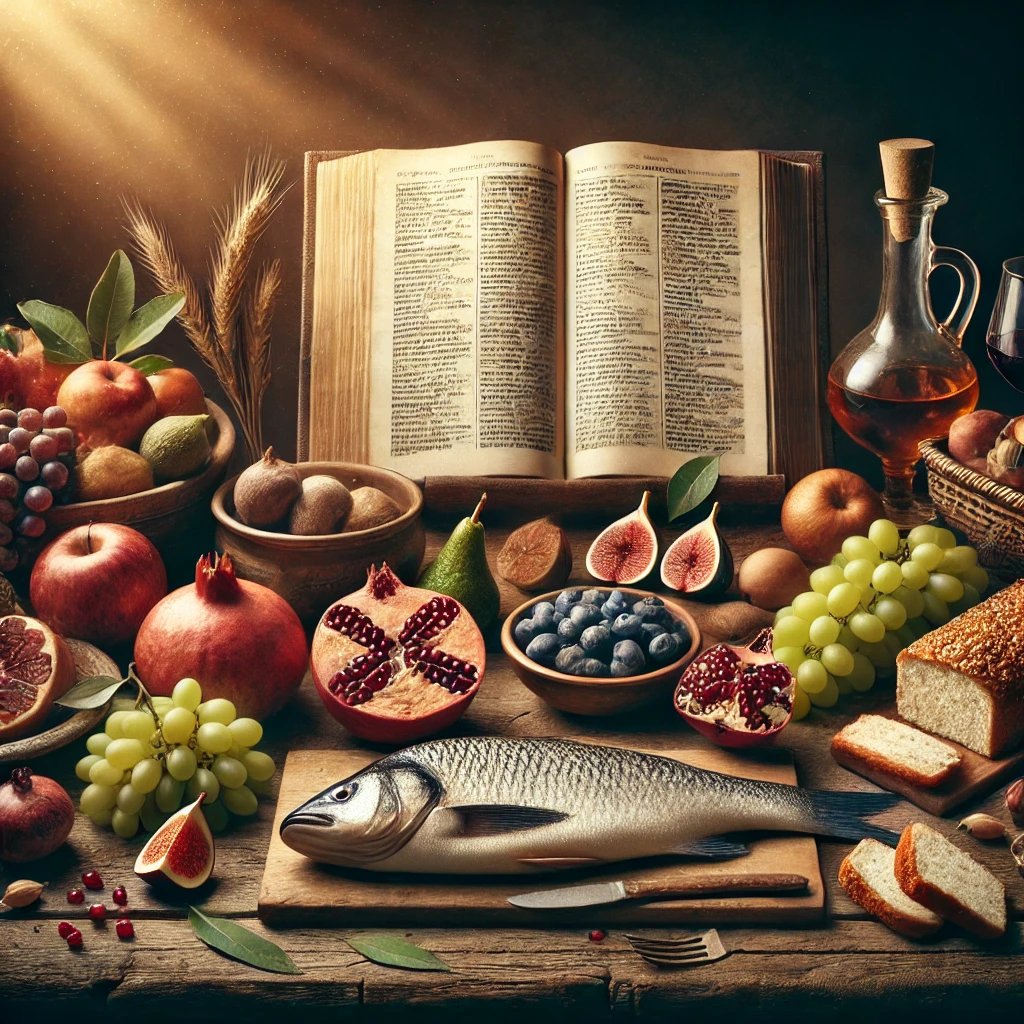
Food plays a significant role in the Bible—not just for physical nourishment but also for spiritual lessons. If you’ve ever wondered why the Old Testament has strict dietary laws while the New Testament seems to lift those restrictions, you’re not alone. The difference reflects God’s unfolding plan for humanity.
In This Article
Old Testament: Clean vs. Unclean Foods
In Leviticus 11 and Deuteronomy 14, God gave the Israelites a clear list of foods they could and couldn’t eat. These laws served multiple purposes: to set Israel apart from other nations, for health and hygiene (many unclean animals carry disease), and as symbolism reflecting spiritual purity.
What Could They Eat?
- Land animals with a split hoof that chew the cud (cows, sheep, deer) — Leviticus 11:3, NASB
- Sea creatures with fins and scales (salmon, trout, bass) — Leviticus 11:9, NASB
- Generally non-predatory birds (chickens, doves, quail)
- Locusts, crickets, and grasshoppers
What Was Forbidden?
- Pigs, camels, and rabbits
- Shellfish (shrimp, crab, lobster) and scaleless fish (catfish, eels)
- Birds of prey (eagles, vultures, owls)
New Testament: A Shift in Dietary Freedom
When Jesus came, He fulfilled the law (Matthew 5:17, NASB) and introduced a new era based on faith, not strict dietary adherence.
What Changed?
- Jesus declared all foods clean: “By saying this, He declared that all foods are clean.” — Mark 7:18-19, NASB
- Peter’s vision affirmed this: “What God has cleansed, no longer consider unholy.” — Acts 10:15, NASB
- Paul’s teaching on food freedom: “For everything created by God is good, and nothing is to be rejected if it is received with gratitude.” — 1 Timothy 4:3-5, NASB
Should Christians Follow Old Testament Dietary Laws Today?
The Bible gives freedom in this area. Some believers still follow Old Testament dietary laws for health or personal conviction, while others embrace the New Testament teaching that all foods are permissible when received with gratitude. Food doesn’t determine righteousness—faith in Christ does.
“The one who eats is not to regard with contempt the one who does not eat, and the one who does not eat is not to judge the one who eats, for God has accepted him.” — Romans 14:3, NASB
“Whether you eat or drink, or whatever you do, do all things for the glory of God.” — 1 Corinthians 10:31, NASB
Final Thoughts
The Bible’s food laws were never just about diet—they were about obedience, holiness, and pointing to Christ. Today, believers are free to eat according to their convictions, but the most important thing is to honor God in all we do.
The views expressed in this post reflect personal biblical study and faith perspective. Scripture quotations are from the New American Standard Bible (NASB). This is not theological instruction or denominational doctrine — readers are encouraged to study Scripture and seek the guidance of their own faith community.