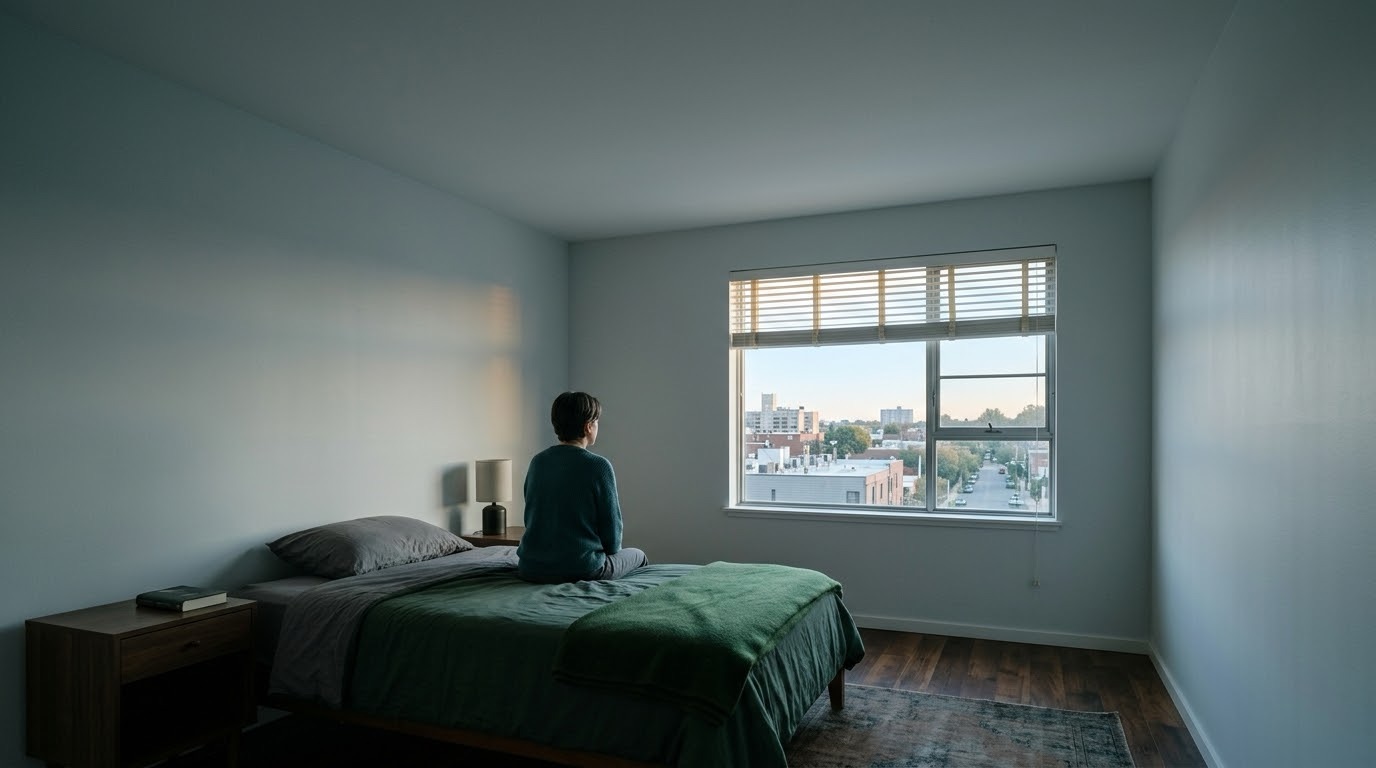
There’s a kind of alone that has nothing to do with how many people are physically around you. You can be surrounded — coworkers, neighbors, a full waiting room — and still be entirely alone in the way that matters, because none of them know the full weight of what you’re actually carrying. There’s no one to call at the end of a hard day who already understands the context without an explanation. No one nearby who’s been tracking the pattern long enough to notice when something’s off before you say a word.
I lived a version of that for years, managing a serious neurological condition in a place that had never fully felt like home, far from the people who’d known me long enough to carry any of it with me. It’s a specific kind of isolation, and it doesn’t announce itself as a crisis. It just sits there, day after day, as the quiet backdrop to managing something hard entirely on your own.
What That Kind of Isolation Actually Feels Like
It isn’t dramatic, most of the time. It’s logistical. It’s the specific math of managing a medical condition without a support structure built for it — figuring out, on your own, how you’ll get from an appointment back to your apartment, who you’d actually call if something went wrong at two in the morning, what happens if the answer to that question is genuinely no one. It’s the low, constant awareness that if something happens, you are the first and possibly only line of response for yourself.
There’s also a subtler cost that took me longer to name. Being fully known by someone — not just liked or worked with, but known in the way that lets another person read your face and tell something’s wrong before you say it — is something most people don’t notice they have until it’s absent. I didn’t have that, for years, in any daily way. There were people at work. There were phone calls with family who cared and were doing what they could from a distance. But there wasn’t anyone in the room. And the specific ache of managing something serious without anyone in the room is different from ordinary loneliness. It’s not about missing company. It’s about carrying medical uncertainty with no one positioned to share the weight of it in real time.
What It Revealed About Resilience and Its Limits
Here’s what I didn’t expect: that period taught me I was more resourceful than I knew, and it taught me, at the same time, that resourcefulness has a ceiling. Both things were true, and neither one canceled the other out.
I got very good, out of necessity, at solving problems alone — arranging transportation, managing medication logistics, handling whatever needed handling without waiting for help that wasn’t coming. There’s a real capability that gets built in seasons like that, and I don’t want to undersell it. Something in a person does rise to meet what’s actually required, more often than we expect going in.
But resourcefulness isn’t the same thing as sufficiency, and conflating the two is where I think a lot of us go wrong. Getting through something alone isn’t proof that going it alone was the right way to get through it. It’s proof that a person can survive conditions that were never actually sustainable long-term. There’s a meaningful difference between “I made it work” and “this was working.” I spent longer than I should have treating the first as evidence of the second.
What actually changed things, eventually, wasn’t becoming more self-sufficient. It was the opposite — letting people back in, allowing myself to be known again in the way that isolation had quietly trained me out of expecting. That’s a harder shift than it sounds like, because isolation doesn’t just remove support. It reshapes what you think you’re allowed to need.
Closing
If you’re in a season like that right now — managing something serious in a place that doesn’t feel like home, without the people who’d carry it with you if they were closer — I want to say plainly that what you’re doing is real and it counts, and also that it isn’t meant to be the permanent shape of your life. Getting through alone is not the same as getting to choose alone forever. There’s a difference between the season that requires it and a life quietly organized around never needing anyone again.
This particular isolation had roots that went back further than the years it’s describing here. Growing Up Outside of Everything traces that feeling all the way back to childhood, long before any of this had a name.
This post touches one thread of a much longer story. Still Walking tells the specific account of those years, and what eventually changed.
Read the Full Story
This post touches one theme. The specific account of those years is in “Still Walking.”
Disclaimer: This post reflects personal experience and perspective. It is not intended as medical or psychological advice. If you’re currently managing a serious illness without adequate support, a licensed counselor, a local support group, or your care team’s social worker can help connect you with resources this post is not equipped to provide.